

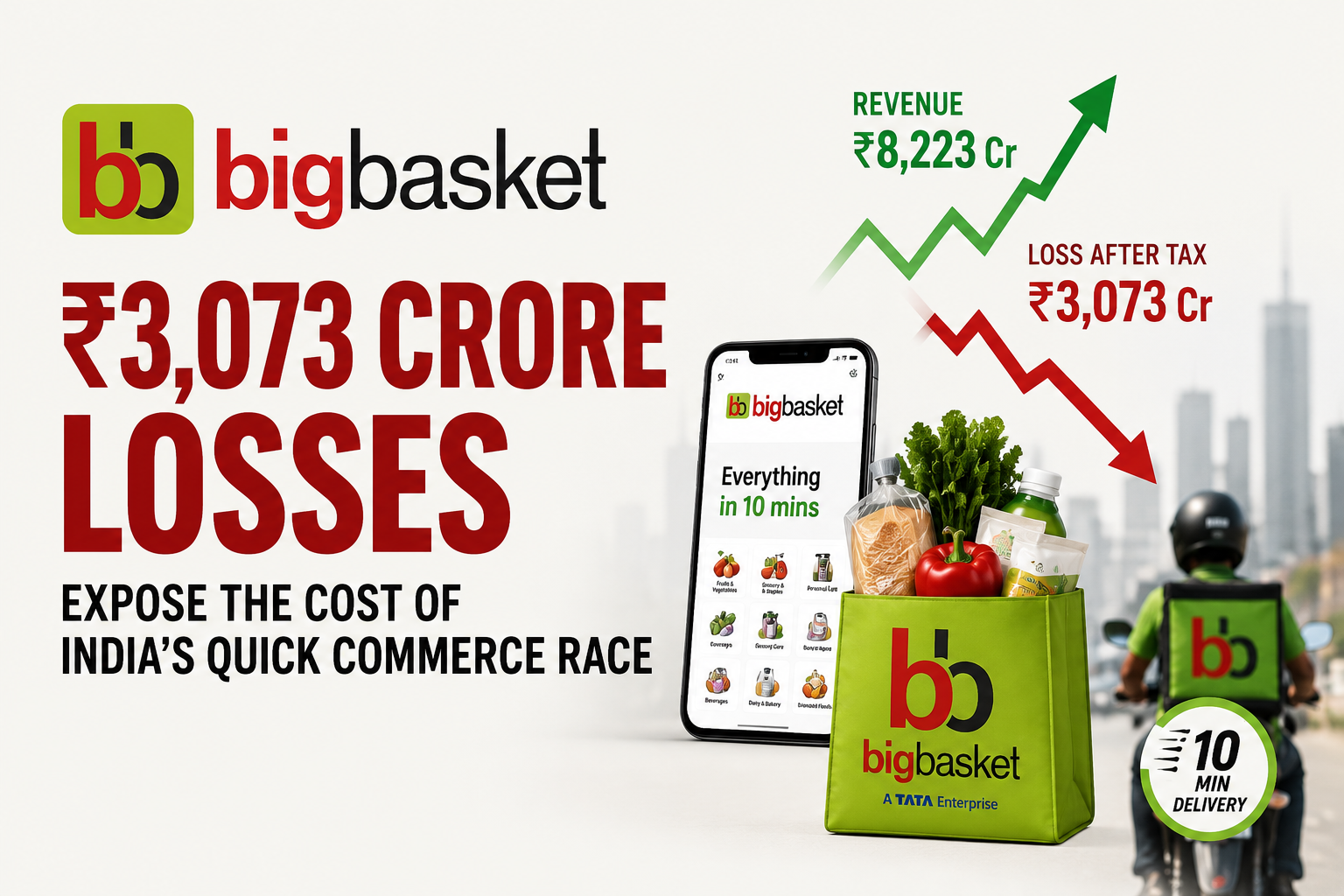
BigBasket’s consumer-facing business reported losses of ₹3,073 crore in FY26, even as revenue continued to grow. The numbers highlight a reality that many industry observers have long suspected: rapid growth in quick commerce often comes at the expense of profitability.
The Growth-Profitability Paradox
It may seem at first that getting increased income is something good. It means that an increasing number of clients is buying, the sum of transactions is getting greater, and the demand for convenience stays high.
However, quick commerce has a very hard-to-handle business model. Firms are obliged to transport goods within 10-30 minutes and keep prices competitive; thus they are investing enormous sums of money in:
Dark stores near the consumers
Large fleets of delivery
Technological frameworks
Discounts
Inventory systems
The Battle for Market Share
As competition gets tougher, this cost gets higher, making profits more difficult to obtain. BigBasket does not face these problems alone.
The Indian quick commerce industry is one of the most intricate ones in the startup market. Companies like Blinkit, Zepto, and Swiggy Instamart constantly compete against each other to offer better services and gain more clients.
In such circumstances, firms create more of customer reach rather than profit-making; the idea is pretty simple: acquire customers now and earn profits later.
Why Consumers Are Winning
Despite companies suffering severe losses, consumers keep enjoying the advantages brought by the market rivalry.
The convenience of swift deliveries, high quality of services, large assortments of goods, and discounts has become the norm in modern life. Goods that used to be thought to represent some exclusive services become something taken for granted by society.
This development mirrors the change in consumer behavior, which includes such values as time and convenience even for simple grocery shopping.
The industry does not question whether consumers care about quick commerce because it is obvious that they do.
Can Quick Commerce Become Profitable?
The major question is whether companies are able to form a viable business model.
Profitability in the future is dependent on the following factors:
-Higher efficiency of deliveries due to AI and other technologies.
-Higher average order size.
-Elimination of discount-based sales.
-Improved forecasting of stock availability.
-Fostering customer loyalty.
Technological advances may help organizations eliminate losses; however, the way to profitability still remains unclear.
A Sign of Industry Maturity
BigBasket’s losses should not be viewed solely as a company-specific issue. They represent a broader industry trend where businesses are investing heavily to shape consumer habits and secure long-term market positions.
Many of today’s largest technology companies experienced years of losses before achieving scale and profitability. Whether quick commerce follows a similar trajectory remains to be seen.
Final Thoughts
BigBasket’s ₹3,073 crore loss is more than a financial headline. It is a reflection of the intense competition, operational complexity, and strategic bets defining India’s quick commerce sector.
The industry has successfully convinced millions of consumers that groceries can arrive in minutes. The next challenge is proving that such convenience can be delivered sustainably and profitably.
Until then, the quick commerce race will continue to reward growth, while profitability remains the finish line everyone is still chasing.
Disclaimer:
This article is intended for informational and news purposes only and should not be considered financial, investment, or business advice. Information is based on publicly available sources at the time of publication. Readers are encouraged to verify details from official announcements before making financial or investment decisions. Company names, trademarks, and logos belong to their respective owners.
