
Budget 2026 Revealed: The ₹12.2 Lakh Crore Secret That Could Explode Your Small Business!
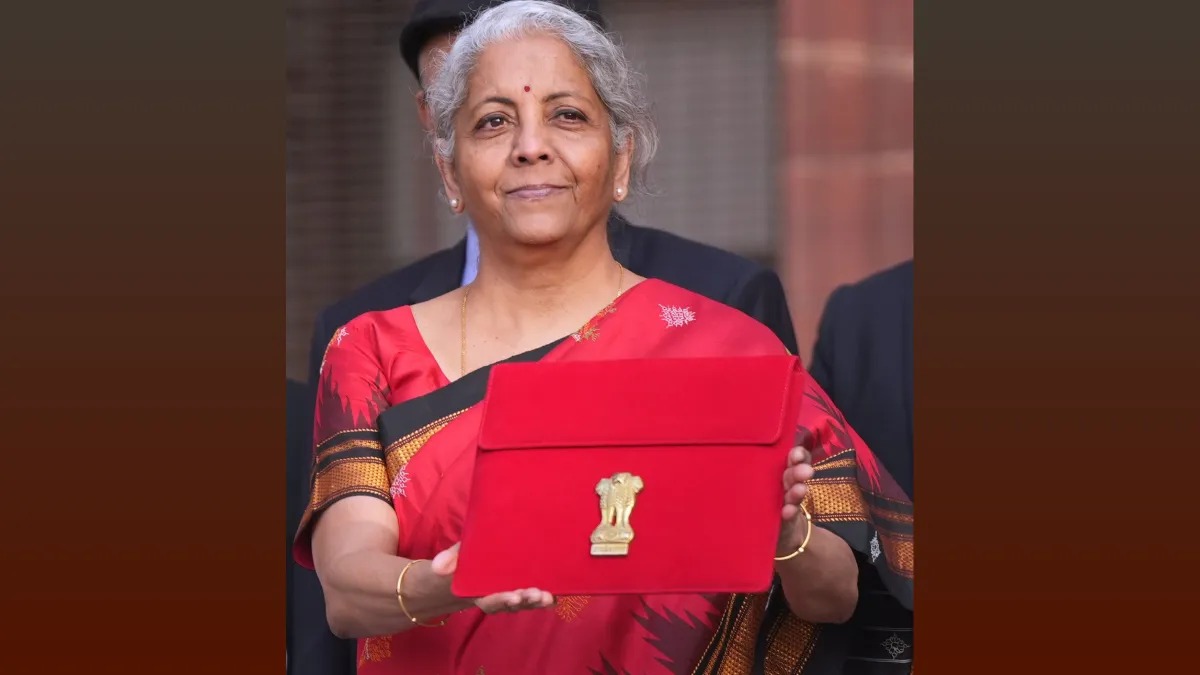
Finance Minister Nirmala Sitaraman’s address on February 1 for Union Budget 2026–27 showcased that the nation is finally concluding its defense mode and moving forward now, considering that India has completed its post-COVID-19 recovery into a growth acceleration mode and small-sized business owners are right in the middle of this evolution.
To provide a practical framework for entrepreneurs’ growth plans, the 2026 National Budget has allocated a record-breaking ₹12.2 lakh crore ($200 billion) for capital expenditure (capex), an 8.9% increase compared to FY22-23. For SMEs, this announcement is not just good on paper; it lays the foundation for sustained growth over several years, driven by increased customer demand, shorter cash cycles, and access to resources that were previously unavailable.
Across various areas, including roadways, airports, rail, and guarantees for risk and liquidity, the 2026 budget is providing the basis for what many industry observers feel will be the highest-growing SME cycle over the past decade.
Why Does Spending on Infrastructure Matter to Small Business Owners?
Why does spending on infrastructure matter to small business owners? Most small business owners consider infrastructure spending to be something far removed from their daily lives. Large bridges, rail lines, freight corridors, and other major infrastructure projects seem to benefit only large contractors and the big global companies that carry out the work; however, history shows that these large-scale infrastructure projects have a ripple effect on the economy.
Every rupee invested in infrastructure generates a ripple effect, cascading through the entire supply chain of the economy, cascading into cement suppliers, equipment manufacturers, transporters, logistics startups, information technology vendors, electrical contractors, fabricators, and various service providers in the economy. This round of infrastructure investment from the government has the potential to generate an unprecedented volume of ripple effects for small and medium-sized enterprises (SMEs).
The Government of India has enhanced their capital expenditure (CapEx) spending in three significant areas. The three pillars of the current infrastructure investment in India are:
High-Speed Railway Corridors—Creating New Markets for SMEs
The creation of seven new high-speed train routes connecting the major economy hubs (Mumbai-Pune, Pune-Hyderabad, and Delhi-Varanasi). The establishment of these routes will lead to substantial improvements in the time required to move shipments across urban areas as well as reduce logistical delays caused by long transit times between suppliers and customers. For small and medium-sized enterprises located along the newly established high-speed rail corridors, these businesses will benefit from improved transport of their products and services to their customers and will have the potential to establish new supplier relationships with the rest of the national supply chain.
Logistics Costs Decline As A Result Of The Upcoming Dedicated Freight Corridors
The announcement of the new East-to-West Dedicated Freight Corridor (DFC) running from Dankuni to Surat is one such initiative. Logistics costs have been one of the biggest challenges faced by Indian manufacturers, as they eat into their profits.
A modern freight corridor will improve transit speeds, ensure predictable delivery times, and reduce overall freight costs, benefiting exporters/manufacturers/e-commerce sellers who operate on thin margins.
City Economic Regions Will Provide A Spotlight For Tier II and III Cities To Thrive
Another initiative in the budget that could prove highly impactful but has received less attention is the establishment of City Economic Regions (CERs), which will be supported by ₹5,000 crore in funding. CERs are designed to develop Tier II and III cities into self-sustaining economic hubs with a modern industrial base, logistics infrastructure, and urban planning.
Local SMEs will find this reduces the barriers to entry by providing them with better access to industrial parks, utilities, and skilled employees. All this happens with far less pressure on resources than in a metropolitan city.
The Invisible Barrier: Infrastructure Risk Assurance Fund
Budget 2026 hides one of the least known, yet potentially transformative, announcements: the Infrastructure Risk Assurance Fund.
Often, lenders are very cautious about financing projects due to the execution risks inherent in construction. When capital is scarce, projects stall, and in most cases, this harms the SMEs that have supplied goods or services to the contractors. Long delays in payment or order cancellations can be devastating for these SMEs.
This fund addresses this issue directly.
This fund will provide the ability for lenders to receive partial credit guarantees from the government. This assurance to lenders will spur confidence to continue to finance projects through challenging times and ultimately ensure that fewer projects come to a standstill, have more steady cash flows, and provide more assurance to SMEs who are directly involved in large infrastructure contracts.
Direct Weapons for MSMEs: Moving from Survival to Scale
Wherein the infrastructure development will help generate future demand, the budget also provides direct support to SMEs who want to grow, modernize, and compete on a global stage.
₹10,000 Crore SME Growth Fund
The government has created a dedicated fund of ₹10,000 crore for SMEs to access equity funding for growth capital for enterprises that exhibit major growth potential. Equity funding does not have an immediate repayment obligation (unlike loans), thereby enabling SMEs to invest in technology, hire additional employees, and enter new markets with greater ease.
With this funding available, Indian SMEs will become global leaders and no longer just local suppliers.
Revitalization of 200 Manufacturing Industry Clusters
Due to outdated technology and poor infrastructure, India’s traditional industrial clusters are declining. The budget proposes to modernize, digitally upgrade, and provide common facilities to 200 of these clusters.
Revitalizing these sectors could boost the economy through small and medium-sized enterprises in areas such as textiles, leather, engineering goods, and handicrafts.
Fast Track Payment Through TReDS
Cash flow is the lifeline for small businesses, and delayed payments have been a silent killer for years. Now, all Central Public Sector Enterprises (CPSEs) are mandated to complete their procurement from Micro, Small, and Medium Enterprises (MSMEs) using the TReDS platform.
This will provide quicker invoice discounts from TReDS and predictability in payment to all stages of the supply chain and will reduce resentment towards more expensive, short-term credit.
Self-Reliant India Fund Boost
The Self-Reliant India Fund is designed to provide risk capital to micro-enterprises and has received an additional ₹2,000 crore for 2026, adding an additional safety net for the smallest of the three types of businesses, which generally are the most at risk but also the most innovative.
Relief From Tax Compliance Frights
Budget 2026 alleviates a persistent problem—anxiety about complying with the law. In addition to providing funding and infrastructure, it addresses the concern that has turned away many small-business entrepreneurs (especially those without extensive finance departments) from starting a business because of the fear of making an error that could result in a penalty.
The New Income Tax Act, which comes into effect on April 1, 2026, will feature simplified language, redesigned forms, and fewer ambiguities, allowing small-business owners to save money on compliance costs.
Additionally, by decriminalizing non-compliance penalties for “minor violations” of TDS (tax deducted at source) and failure to produce books of accounts, the government is moving away from punishment to correction, reducing the fear that has discouraged many entrepreneurs from taking calculated business risks.
The removal of the ₹10 lakh (ten lakh rupees) limit on the export of courier shipments from India will help small- and medium-sized exporters comply with international regulations regarding importing and exporting goods, therefore allowing artisans and small e-commerce businesses to more easily reach worldwide markets.
Big-Picture Thinking—Infrastructure Investment Equals Stability
Though the ambitious Budget 2026 provides significant funds for domestic and international economic development and is likely to meet its target for fiscal deficits at a disciplined level of 4.3% of GDP, the fiscally prudent government plan signals the continued fiscal and macroeconomic stability of India, enhancing the investment community’s confidence in India and contributing to India’s attractiveness for doing business.
Implications for Small Businesses
The budget for 2026 is not just a stimulus for one year; rather, it serves as the roadmap for growth over multiple years. As an SME, contractor, service provider, export company, or tech startup, you can see that it’s time to ramp up.
With the Rs. 12.2 lakh crore government infrastructure investment and SME-targeted reforms, many new opportunities are now available to businesses that modernize themselves, invest in their facilities, and are aligned with the latest demand trends. If you do these things, you will have the best chance of being a large benefactor of the next phase of the growth in the Indian economy.
Leave a Comment