
As the startup industry of India transitions into its next phase, it is becoming equally important from both a business perspective and from a regulatory perspective, to ensure that businesses are managed in compliance with the legislation governing them (i.e., having the appropriate structures for corporate governance). There has been a great deal of focus on domestic funding of startups and how the increase in investment activity will drive future growth.
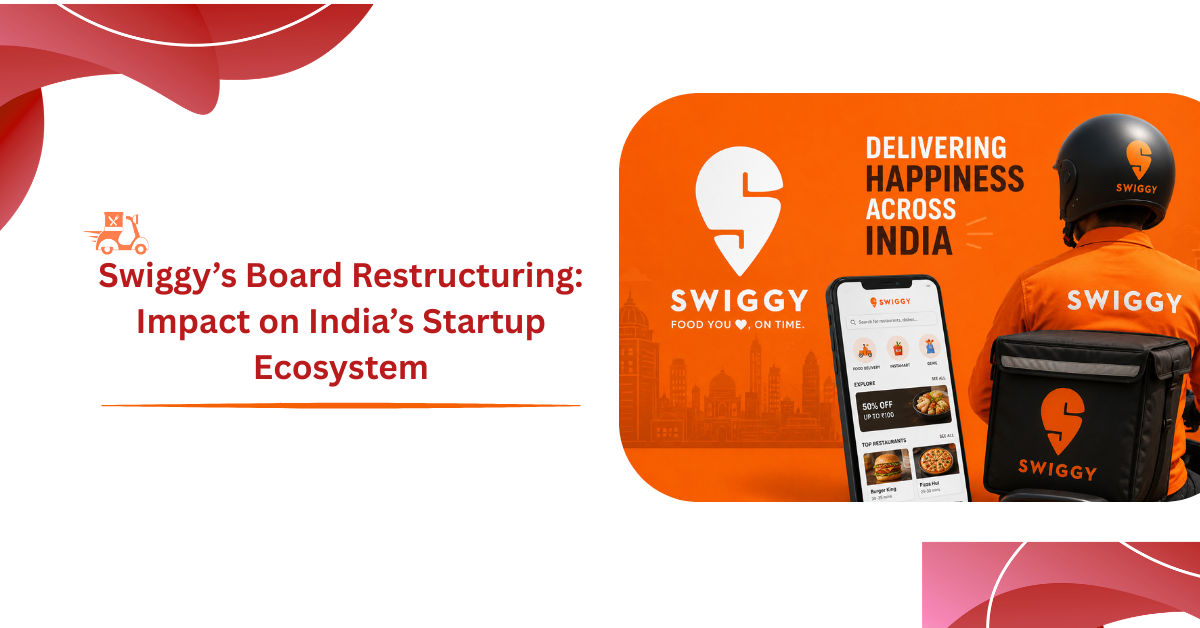
With fresh examples being provided regularly (e.g., Swiggy recently announced proposed changes to its board nomination structure and governance framework through a stock exchange filing), this is clearly noticeable in the foreign investment structures currently being scrutinised in startups. As the regulatory environment evolves rapidly, tech companies are now having to assess their requirements for compliance with expectations as outlined by the FEMA (Foreign Exchange Management Act). The new operations of either a domestic or a foreign funded company will significantly shift based on the transition to becoming an IOCC. In order to qualify as an IOCC under FEMA (Indian Owned and Controlled Company), the company’s key criteria include having both an Indian resident(s), Indian controlled entities and majority ownership by Indians).
Right now, Swiggy has significant foreign investments from global companies like Prosus, SoftBank, etc. These investments enabled the company to grow rapidly in one of India’s most competitive sections of the food delivery and quick commerce sectors, but they are causing the company to become more complicated due to the classification of such investments under Indian laws for foreign investment.
According to the company, it does not currently have a known promoter group with sufficient representation on its board to demonstrate domestic control on a regular basis. Therefore, restructuring the governance model of Swiggy is a necessary step towards creating a long-term regulatory strategy.
Swiggy also stated that the amendment would not make it an “Indian Owned and Controlled Company (IOCC) immediately because IB and other similar regulations would have to be amended to reflect the new classification, which requires additional corporate actions, approval from shareholders, and an increase in the percentage of Resident Indian Holders to over 50%. Nevertheless, the announcement alone signals a large change in how Indian startups are looking forward to the future.
This is very important for India’s start-up ecosystem because it shows how many more start-ups focus on governance structures than before when they were focused on just raising money and growing fast. Some businesses are now working harder at not only looking out for their investors, but also complying with regulations and building a long-term strategy.
Swiggy’s actions could lead to more Indian unicorns with significant foreign ownership to evaluate their governance structure. As the Indian Government implements more rules on the use of digital platforms and foreign investment, more start-ups will be likely to look at including Indian-based governance structures only to avoid being shut down for some operational risk and/or regulatory risk in the future.
The timing of Swiggy’s restructuring is also interesting, as they continue to grow strongly. The company reported revenues for Q4 FY24 of Rs 6,383 crore representing a 44.7% increase on a Y-o-Y basis compared to Rs 4,410 crore in the same quarter of the previous year. At the same time, the company’s loss has declined by 26%, indicating continuing operational improvements in spite of an intensely competitive market.
To summarize, the changes in Swiggy’s management style reflect larger trends in India’s startups—moving toward better governance, ownership, regulation, and the sustainability of long-term growth. For example, as rules change, many companies will likely be adjusting how they run themselves in order to respond to the changes occurring in India’s increasingly regulated digital economy.
Disclaimer:
The information provided in this article is for general informational and educational purposes only. While efforts have been made to ensure accuracy, the content is based on publicly available reports, company filings, and media sources at the time of writing. The article does not constitute legal, financial, investment, or business advice. Readers are advised to conduct their own research or consult qualified professionals before making any business or investment decisions.