

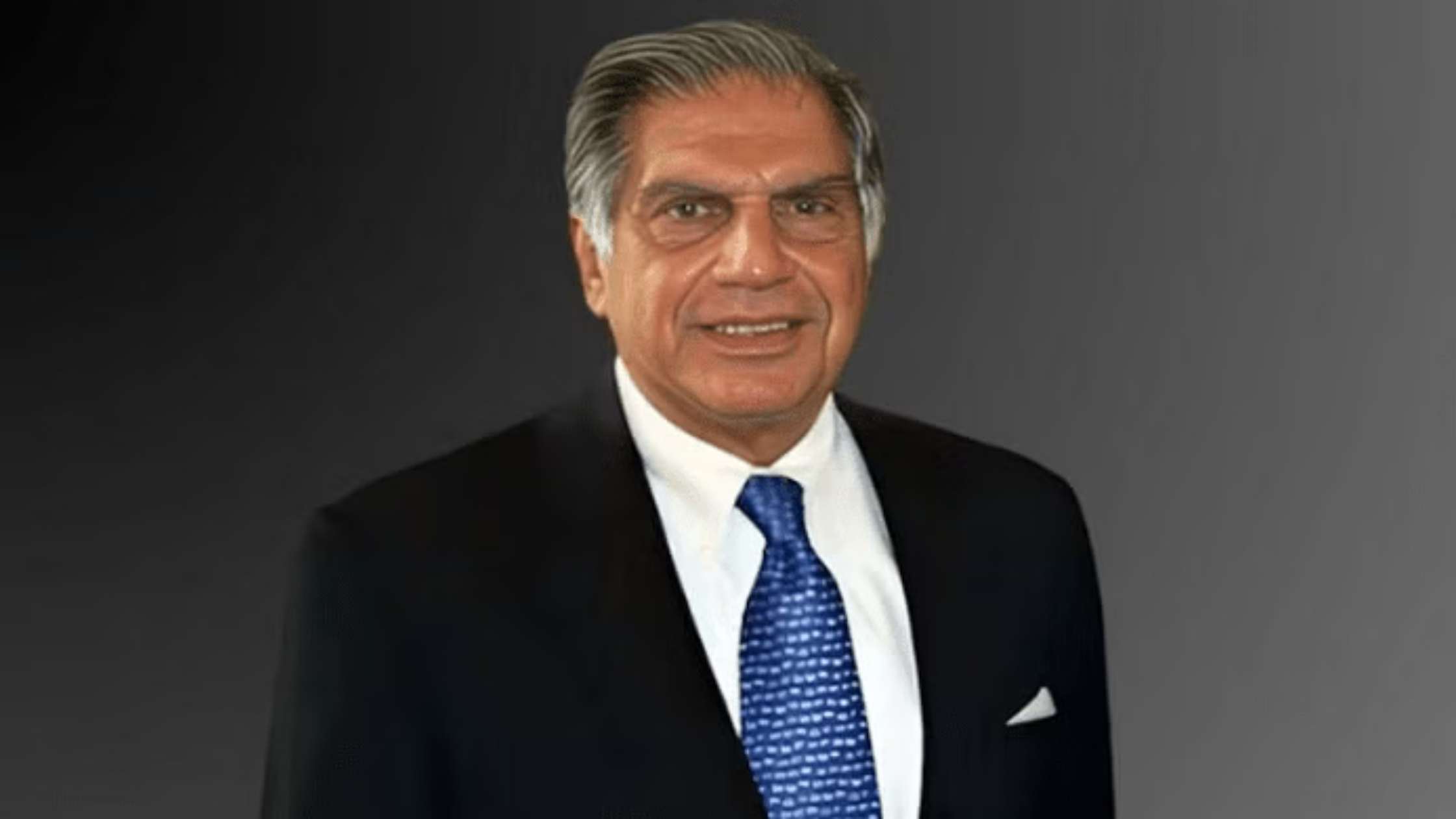
On October 9, 2024, India lost one of its most cherished industrialists and philanthropists, Ratan Tata, at the age of 86. The former chairman of Tata Sons, Tata’s passing marks the end of an era for the Tata Group and the larger Indian business landscape. Ratan Tata breathed his last breath at Mumbai’s Breach Candy Hospital, where he had been admitted due to complications arising from age-related health issues. Despite his reassurances to the public about his health a few days prior, his condition worsened, leading to his untimely demise.
Known for his humility, visionary leadership, and dedication to ethical business practices, Tata was more than just an industrialist. He was a guiding force behind one of India’s largest and most diversified conglomerates, the Tata Group, and left a lasting impact on global business and philanthropy.
Early Life and Education
Born on December 28, 1937, in Bombay (now Mumbai), Ratan Tata came from a family deeply embedded in India’s industrial history. His father, Naval Tata, was adopted by Navajbai Tata, wife of Ratanji Tata, making Ratan Tata part of the extended Tata family that had built one of India’s most prestigious conglomerates. After his parents’ separation when he was 10, Tata was raised by his grandmother, Navajbai Tata.
Ratan Tata’s education began at the Cathedral and John Connon School in Mumbai, followed by the prestigious Campion School and Bishop Cotton School in Shimla. He later attended Riverdale Country School in New York City. Tata is an alumnus of Cornell University, where he earned a degree in architecture, and Harvard Business School, where he completed an Advanced Management Program. His time in the U.S. gave him an international perspective on business, which later shaped his leadership at Tata Group.
Leading the Tata Group to Global Prominence
Ratan Tata’s career with the Tata Group began in 1961, but his true test came when he took over the company’s reins from his legendary predecessor, J.R.D. Tata, in 1991. As the new chairman of Tata Sons, Ratan Tata was met with resistance from senior leaders, many of whom had spent decades at their respective companies. Undeterred, Tata implemented strategic changes, setting retirement ages for leadership positions and centralizing decision-making.
Under his leadership, Tata transformed from a largely India-focused company to a global enterprise. His vision led to landmark acquisitions, such as Tata Tea’s purchase of Tetley, Tata Steel’s acquisition of Corus, and Tata Motors’ takeover of Jaguar Land Rover. These bold moves positioned Tata Group as a major global player while maintaining its integrity and ethical business values.
Tata’s leadership saw the group’s revenues grow more than 40 times, and its profits increase over 50 times. Perhaps one of his most iconic contributions was the creation of the Tata Nano, an affordable car designed for the average Indian family, which demonstrated his commitment to making technology and innovation accessible to the masses.
A Champion of Philanthropy and Social Causes
Beyond the business world, Ratan Tata was a philanthropist at heart. Through the Tata Trusts, he invested heavily in education, healthcare, rural development, and technological innovation. He spearheaded initiatives to improve the quality of life for underprivileged communities in India and abroad.
One of Tata’s most notable contributions was the establishment of the Tata Scholarship Fund at Cornell University, providing financial aid to Indian students. In 2010, Tata Group donated $50 million to Harvard Business School, and Tata Consultancy Services (TCS) made a landmark donation of $35 million to Carnegie Mellon University for research into autonomous systems.
In India, the Tata Trusts have funded major initiatives such as the Tata Centre for Technology and Design at IIT Bombay, the Tata Centre for Neuroscience at IISc, and various healthcare projects addressing critical diseases like Alzheimer’s.
Personal Life and Legacy
Though Ratan Tata remained a private person, his personal life was often a subject of intrigue. In a 2011 interview, Tata revealed that he had come close to marriage four times but ultimately backed out for various reasons. Despite this, his commitment to his work and philanthropic efforts never wavered.
Ratan Tata’s legacy extends far beyond his business achievements. He was a leader who believed in the greater good and consistently prioritized social impact over personal wealth. His famous quotes, such as “I don’t believe in taking the right decisions. I take decisions and then make them right,” reflect his pragmatic approach to life and business.
In 2008, he was awarded the Padma Vibhushan, India’s second-highest civilian honor, and the Padma Bhushan in 2000. Internationally, Tata was recognized with several prestigious awards, including honorary degrees from leading universities and the Knight Commander of the Order of the British Empire (KBE) from Queen Elizabeth II.
A Profound Loss for India
Ratan Tata’s passing has left a void in the hearts of millions. Tributes poured in from all corners of the globe, with business leaders, politicians, and everyday citizens expressing grief over losing a man who shaped modern India’s corporate ethos. Industrialist Harsh Goenka aptly described Tata as a “beacon of integrity” whose leadership was defined by compassion, vision, and an unwavering commitment to ethical practices.
His death is a loss for the Tata Group and India. As India continues to emerge as a global economic power, Tata’s values of integrity, philanthropy, and commitment to social progress will serve as guiding principles for future generations of business leaders.
Conclusion
Ratan Tata’s legacy is of excellence, empathy, and transformative leadership. From steering one of India’s largest conglomerates to investing in ventures that touched the lives of millions, his contributions to the business world and society will be remembered for years to come. His passing is a profound reflection on a life dedicated to improving the world through business, philanthropy, and visionary leadership.